
2017 has been an absolute blast travel wise. Looking back at what I was able to witness, cannot help but feel an immense gratitude for the opportunity and privilege to be able to do what I do. So I succumbed and made a year in review video featuring my 10 most cherished moments from this year's many, some extraordinary, wanderings.
 [Meghalaya | Monsoon 2013]
Born in the month of June on a day when heavens opened up like a flooded reservoir, my parents tell me my name is inspired by the dark blue of a stormy evening. Perhaps that why I have always felt a strong connection with the monsoon. On all those monsoon Sunday afternoons where my family huddled up in the living room watching the special movies telecast on DD National, I remember sneaking outside, trying hard to make sense of the deep nostalgia the rains evoked in me. A child (and an adult) with a hyperactive imagination, I weaved strange stories of a past life to explain to urge to drop everything and watch when it rained. Two decades later I was still no where close to understanding that obsession but I learned I didn't need to understand it at all. I could just revel in it instead. Since then, I've spent the next decade chasing monsoon every year in every possible corner of the country, filling up a jar full of memories tinged with stormy skies and surreal views.
An ode to my obsession
To love monsoon
Here are 30 Reasons.
#1 because sunny days may be beautiful and all that but they are no match to the spectacle of a monsoon sky! There are few sights as glorious as the ephemeral minutes between black, roiling clouds morphing into a thick curtain of rain.

Garo Hills, Meghalaya | Monsoon 2013
#2 because rivers come to life and how!

Sharavathi River, Karnataka | Monsoon 2010
#3 because thunderstorms light up the skies with an ardent fervour! A normal person would probably balk at the idea but I personally love it when I get to witness the freakish glory of nature's fury, like flashes of lightning and loud thunder piercing the stillness of the night.

Neora Valley National Park, West Bengal | Monsoon 2017
#4 because it teaches us that life isn't about waiting for the storm to pass, it's about learning to dance in the rain. Props to Vivian Greene for that great line! 🙏

Garo Hills, Meghalaya | Monsoon 2013
#5 because it rains even in the desert and it is nothing like we've imagined. It's plain gorgeous!

Around Jaisalmer, Rajasthan | Monsoon 2013
#6 because wild flowers come into existence!
You see, delicate flowers growing wild and free is the ultimate testament to a region's pristine condition in my book.
Kudremukh National Park, Karnataka |
#7 because waterfalls big and small get a new lease of life and spring up everywhere, from mountain slopes to road sides.

caption
#8 because the romance of going on a long walk a on rainy day and feeling the force of monsoons through the flimsy comforts of an umbrella is enough to make us forget all our blues!

Munnar, Kerala | Monsoon 2013
#9 because rainbows are abundant this season and what's life without a bit of color in our skies? ;)

Garo Hills, Meghalaya | Monsoon 2013
#10 because misty morning scenes set amidst lush greenery that seem straight out a fairy tale play out in the monsoon months.

Madikeri, Karnataka | Monsoon 2012
#11 because when it rains, a gorgeous brook like this is just a stop-by-the-roadside away! No more hiking in dense jungles in reach a tiny trickle, monsoon magic at your doorstep if you will.

Goa | Monsoon 2010
#12 because Sonki, a true blue monsoon special! 🌻
Oh my god, Sonki, these tiny yellow flowers literally carpet the entire Sahyadris during monsoons. I have never ever seen flowers mass bloom to this extent, they were everywhere during my trek to Ratangad one monsoon. Vast swathes of the upper reaches were packed with these flowers, so much that you could see streaks of yellow from a kilometer away!
Oh my god, Sonki, these tiny yellow flowers literally carpet the entire Sahyadris during monsoons. I have never ever seen flowers mass bloom to this extent, they were everywhere during my trek to Ratangad one monsoon. Vast swathes of the upper reaches were packed with these flowers, so much that you could see streaks of yellow from a kilometer away!

Ratangad, Maharashtra | Monsoon 2016
#13 because it gives us a reason to let the inner child out. Look at me frolicking around that gorgeous tree without a worry in the world despite having a long ride in the dark waiting after this to the homestay.

Mandalpatti, Coorg | Monsoon 2012
#14 because there's no better time to go on a road trip!

Maharashtra | Monsoon 2012
#15 because the parched lands get a new lease of life and we only have the rains to thank for that!

Shettihally, Karnataka | Monsoon 2011
#16 because you can see it happening, a trickle becoming a roar. That's how you know everything is coming alive around you, when it rains.

Uttara Kannada, Karnataka | Monsoon 2011
#17 because even dull and boring towns can look pretty when it rains!

Ganesh Tok, Sikkim | Monsoon 2011
#18 because even deserts sprout greenery when it rains. And the fact that it is ephemeral, makes it all the more surreal, like this oasis in the middle of a desert.

Thar Desert, Rajasthan | Monsoon 2013
#19 because you can see that favorite mountain of yours is changing colors for good, soon it will all be glistening in a lovely shade of green that only rains can paint!

Palani Ranges, Tamilnadu | Monsoon 2011
#20 because our little hearts overflow with joy at the very sight of heart-shaped lakes brimming with water! 😉

Chembra Peak, Wayanad, Kerala | Monsoon 2012
#21 because there's an unfathomable charm to scurrying away from pelting rain and thunderstorm to hide under a ridiculously small tree, seeking protection from the glorious fury unleashing above you!

Mannavanur, Tamilnadu | Monsoon 2011
#22 because 'tis the season for hiking! There's no better time to hike in the Sahyadris but monsoons, unless you are rock climbing of course. If the forests of Karnataka maintain some semblance of greenery even during harsh summers, Sahyadris are depressingly bone dry and barren brown in every other season except the rainy season. And what a blasphemy it would be to miss its glorious beauty when it rains!

Garbett Point, Matheran, Maharashtra | Monsoon 2016
#23 because petrichor! Need I say more? 😉

Nelliampathy Hills, Kerala | Monsoon 2016
#24 because the sustenance we so need gets its sustenance during the rains, just look at those lush fields and the gentle flow of that seasonal river!

Almora, Uttarakhand | Pre-Monsoon 2015
#25 because the abundant rains paint not only the earth green, but also water! Monsoons bring out the beauty in almost everything, don't you think?

Wilson Dam, Bhandardara, Maharashtra | Monsoon 2016
#26 because monsoons show you a new side of a destination you didn't give a second thought to earlier but now you cannot believe you didn't see this beauty all along.

Araku Valley, Andhra Pradesh | Monsoon 2016
#27 because when a ghostly veil of mist ensconces the landscape, it hides the ugly gashes of civilization, making everything seem all the more alluring.

Kudremukh National Park, Karnataka | Monsoon 2013
#28 because forts inundated in lush greenery have won my heart ever since Mani Ratnam showed the beauty of moss-ridden ancient walls in Bombay's "Tu hi re".

Vasai Fort, Maharashtra | Monsoon 2016
#29 because it is otherwise impossible to trace the contours of the deep chasms and ravines of our favourite mountains if not for the fleeting monsoon clouds that effortlessly slip in and out of these inaccessible geological features!

Ratangad, Maharashtra | Monsoon 2016
#30 because monsoons do not represent gloom and doom to me, like it does for many. It only makes me happy, immensely.

Coorg, Karnataka | Monsoon 2014
So tell me in the comments!
Your stories, favorite photos or reasons from my list, to love monsoons?
Your stories, favorite photos or reasons from my list, to love monsoons?
As our definitions of vacations have changed from hectic, see-everything-you-can sightseeing holidays to leisurely travels where we would rather not see hordes of people blocking our view, the wide open spaces of the world seemed to have shrunk but thankfully haven’t disappeared altogether. It’s time for us to start experiencing destinations in a whole new way by stepping beyond the cliché and exploring the hidden gems around popular spots. Kerala is a hot favourite among travellers and naturally gets a lot of attention. That means it can feel crowded and all too familiar at times. Fortunately, the state has enough sights and secrets to hold those who stray off the beaten path, in rapture. Including the likes of hiking in the flourishing hills of Nelliampathy and a walk among the humbling Dolmens of Marayoor, here are few offbeat ways to experience the best of Kerala.
Walk among the ancient Dolmens of Marayoor

In an unassuming town called Marayoor, 42 kms away from Munnar, a secret of historic proportions is waiting to be unraveled by anyone who is willing. Ancient dolmens that have miraculously survived the test of time (over 5000 years to be precise) can be found littered on a rocky slope at the edge of this particular village. Dolmens are megalithic structures from prehistoric age where large slabs of stones are stacked together to form tombs. Given these are structures from thousands of years before, there is little information available but the idea that something from another time has survived all this while is most intriguing. Located on the barren slopes of a hill overlooking the town of Marayoor and Pambar river, surrounded by the looming hills of Western Ghats, it is hard not to get drawn to the intense energy of the place. It helps that the drive to the town of Marayoor from passes in immensely beautiful as well, including the famous section through the rare and natural Red Sandalwood groves on the way.
Fall in love with the misty peaks of Nelliampathy Hills

The first glimpse of Pothundy Dam on the way to Nelliampathy Hills is a great preview of the spectacular scenic beauty of this little-known hill station located 60kms away from the town of Palakkad in Kerala. The glimmering water of the reservoir is surrounded by lush forest and pointy hills that extend till the eye can see; it looks particularly impressive on a stormy day. Even though a lot of the forest here has been converted to massive tea, coffee and cardamom plantations, there’s still a huge swathe of forest that’s pristine and where wild things roam free. With the help of a forest guide, a hike to one of the viewpoints inside the protected area offers stunning vantage point views of the valleys below the windswept slopes.
In case you are headed to Kerala soon, there are some exciting cahback offers on MakeMyTrip with Citi cards. You can avail these offers on flight and hotel bookings. Check them out here. I have been using these offers quite diligently!
Sip in the stunning views from Kolukkumalai Tea Estate

While the usual reason to visit Kolukkumalai Tea Estate on Kerala-Tamilnadu border may be sampling a cup of the delightful organic hand-rolled tea, I offer another incentive. Stunning views of a Tea Garden dwarfed by rugged mountains and surrounded by deep valleys! At 8000ft, this has to be the world’s highest organic and orthodox tea processing estates that eschews machinery to Cursh-Tear-Curl machinery. A sad excuse of a jeep trail winds through the tea plantations to climb to this estate and the road is as bad as it can get. The trail then crosses over to the other side to reach Kolukkumalai. The journey, though backbreaking, offers full redemption in the form of extraordinary views. From here, we can see the mountains and villages in Tamilnadu. The tea factory here has been standing since 1930s and is still in use to produce tea in the orthodox seven-step process.
Spend some quiet moments on the banks of secluded Sita Devi Lake

Nestled between lush forests of Devikulam, yet another little known hill station in the vicinity of the more famous Munnar, Sita Devi lake is a small but idyllic water body which can only be reached on foot. What it misses in grandeur, Sita Devi lake more than makes up for it with its incredible serenity. Without any of the ugly manifestations of so-called development, the lake is pristine as it comes, surrounded by lovely groves immediately and tea plantations in the far distance. Even the hike along the dense forest and by the stream is equally enjoyable as the destination by the end. The hike starts from one of the estates in Chinnakanal that’s at a distance of 22kms from Munnar, and is an easy one-hour effort, quite suitable for beginners.
Or you could also apply for the Citi PremierMiles Credit Card with which you can earn miles on all your spends and also instantly redeem them across 100+ domestic and international airlines, and for hotel bookings.
Marvel at the heart-shaped lake on Chembra Peak in monsoons

While Chembra Peak is a great hike during most part of the year, it is only in the monsoons that the grasslands covering the higher reaches of the mountain transform into a lovely carpet of green. Between that glistening expanse of swaying grass, the heart-shaped lake of Chembra shines like a jewel. As you go higher up on the trail, a view of the lake below and its iconic shape becomes more and more detailed. The starting point of the hike to Chembra Peak is situated at a distance of 8kms from the town of Meppady and the period just before or right after monsoon is the best time to hike here. At 2100m high, in theory, it the lure of scaling one of the highest peaks of Wayanad that may draw the traveller to Chembra Peak, but it is the heart-shaped lake that eventually steals your heart.
Have you been to any of these places? Or perhaps you have more secrets from Kerala you'd like to share with me?
Note: This post contains sponsored links.
Racing against time and a sky on fire, Ravi brought his motorbike to a screeching halt at Butler Bay when I made a frantic run towards the beach. I was hoping to catch the day's last light from the shores of Little Andaman, the southernmost tip of Andaman archipelago. At the behest of an acquaintance, Ravi, a native school teacher graciously agreed to play host to a fraught solo traveller who was hell bent on exploring this island with nonexistent tourist infrastructure but wasn't brave enough to venture that far without knowing a single person. He took the pain to drive me across the vast island and brought me to what was decidedly the best I had seen in Andaman yet. For starters, measuring over 22kms, it is the longest beach of the whole archipelago!

Blazing sunset at Butler Bay, Little Andaman
Think Andaman and the first thing that pops into mind is probably Havelock. So as any offbeat traveller worth her salt, I did what I had to do – skip Havelock entirely to find more about the emerald isle's little known charms. Not only was I able to evade disappointment about my decision to skip the well known, I was also generously rewarded with long stretches of pristine beaches all to myself. Now that I've seen a teensy bit of all that Andaman keeps hidden, I'm surprised when most visitors dedicate a little less than a week to explore these islands. And I'm also told they get bored by the end of those paltry few days. Well I wouldn't blame them for getting bored if all they ever did was stay in Havelock the whole time (and not dive!).
But if your purview can go beyond Havelock, here are few beaches you could happily spend your precious time at. And the best part about these places is that, as with anything that's worth something, it isn't going to be offered to you on a silver platter. You've got to work for it; in Andaman's case that means putting up with long journeys and getting used to the island pace of life first! ;)
If you do, this is the spectacle that awaits you!
Disclaimer: If you’re looking for beaches with “activities”, let me warn you beforehand that you’ll find none of those here. These are deserted beaches with nothing to do except an abundance of raw beauty. I would suggest checking out Expedia’s interactive list of best beaches in India instead.
Lalaji Bay, Long Island

 |  |
A sliver of white sand coast neatly curving along turquoise blue waters is the gift Long Island grants worthy hikers who do not mind getting their feet dirty either in the muck of the jungle or in the grave of corals. Far away from Port Blair and the crowds of Havelock, Long Island is a little speck of a land in the central region of Andaman. On one end of the island is the civilization, all of 2000 people and zero vehicles. On the other end, separated by an impenetrable tract of forest exuding a primeval quality, is a secluded beach called Lallaji Bay. Fringed by coconut groves and mangroves, this beach feels as far away from reality as it is from civilization. If escaping people was your intention, you’ve reached your corner!
Also read: Off the grid in Andaman (My story from Long Island published with NatGeo Traveller India)
How to reach: From the jetty/village, follow the red arrow marks to hike through the jungle or hike along the coast for 2 hours to reach Lalaji Bay. The coastal walk is along a narrow strip of sandbar that gets submerged as the tide rises and the other side is a mud wall created by eroded forestland.
How to reach the island? Look here - Guide to Island hopping in Andaman
Laxmanpur Beach, Neil Island

 |  |
Despite being overshadowed by Havelock’s towering presence, Neil Island gracefully manages to hold its own with its smattering of wilderness and abundance of pastoral lands. Flat and devoid of dense forest, Neil feels much less claustrophobic which in turns is conducive to exploring the island without the fear of getting lost or risky encounters. Situated near the northernmost tip of the island, Laxmanpur beach is quite the spot for gorgeous sunrises and sunsets. At walking distance from two of the resorts at the best thing about Laxmanpur beach is that you can see both sunrise and sunset from here, it being the tip of the island with clear views on both sides, towards east and west.
How to reach: The beach is at a walking distance from Laxmanpur Beach if you’re coming from the beach side. But you’ll have to keep the tidal cycle in mind. Or you can ride on a scooter till Pearl Beach Resort near the tip of the island and proceed further on the small pathway through the jungle that leads all the way till the beach.
How to reach the island? Look here - Guide to Island hopping in Andaman
Lamiya Bay, Diglipur

 |  |
For when you get tired of watching the same old gorgeous white sand beaches, Lamiya Bay’s stunning volcanic sand beach situated in the northern reaches of Andaman offers a great alternative. Named after a small colony of villagers inside the forest with the same name near Diglipur, the coast here is awash with dark colored sand that sets quite a contrast to the blue waters of the ocean. Situated at the base of Andaman and Nicobar’s highest point, Saddle Peak, the beach is also a known turtle-nesting site.
How to reach: From Kalipur beach, where the Pristine Beach Resort and Turtle Bay Resort are located, Lamiya Bay is a 30 minute walk along the shore. There’s also an approach via the road.
How to reach the island? Look here - Guide to Island hopping in Andaman
Kalapathar Beach, Little Andaman

 | |
Saving the best for the last, let me tell you that Little Andaman’s beaches are the stuff of legends. For decades, this island that lies well off the beaten path has gained cult status among surfers for it’s great surf. But it’s not just the surf that’s attractive, with the longest beach in the archipelago and blues that only seem unreal, the coast here is secluded, deserted and all for you to enjoy if you manage to make it that far. While the entire coast is stunning, Kalapathar beach gets a special mention because of the volcanic rock formations that form a curved barrier into the sea forming a great lagoon that fills up and drains as per the tide. A small opening in the jagged rocks opens into a view of the ocean and if you want to forget rest of the world exists; this is the place to be!
How to reach:
Located at the 13km mark (from the jetty at Hutbay. In Little Andaman, places are named after their distance from the jetty), just before the famous Butler Bay, Kalapathar beach is accessed by a road though the rehabilitated housing colony after the 2004 Tsunami.
How to reach the island? Look here - Guide to Island hopping in Andaman
Netaji Nagar Beach & Butler Bay Beach, Little Andaman
 |  |
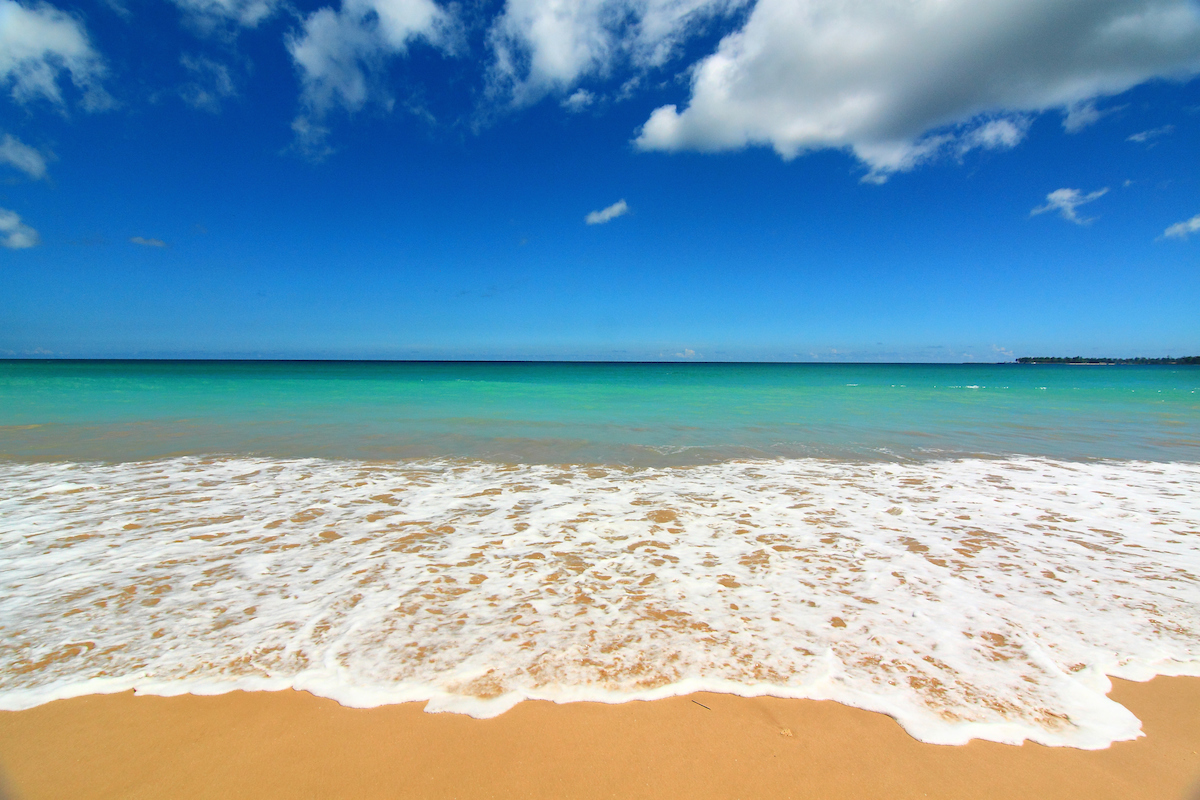
Situated between the 8-kilometer mark and the 14-kilometer mark, Netaji Nagar beach extends into Butler Bay beach that is one of the prime surf spots. Unlike the other island beaches, the coast here faces open waters of Andaman Sea and naturally the waves here are quite rough and strong currents run underneath. Unless you are an expert at swimming in open waters, wouldn’t recommend getting into waters here but these beaches are excellent places to sit by the shore and wonder if the blue is indeed real! Of course, please take ample protection against sandflies that will bite you to death and the occasional crocodile that unfortunately kills locals often.
How to reach:
Follow the single road that runs across the length of the island and you’ll find exits to these beaches towards the coast. You can hire bikes at the island and drive to these. Otherwise, share autos ply on this route frequently and you get around for few bucks.
How to reach the island? Look here - Guide to Island hopping in Andaman
Have you been to any of these beaches or discovered any secret spots in Andaman?
Note: This post was written in collaboration with Expedia.
Related Reading:
2 Weeks in Andaman - Photos of Tropical Paradise
The Amazing Forests of Andaman in Pictures


